The $750,000 Ceiling
In 1993, Arne Frager got a phone call that would rebuild his studio. Metallica wanted to book the Plant for an extended album cycle. Their producer Bob Rock had one condition before they'd sign anything. The ceiling in Studio A needed to come up eighteen feet. Studio A's ceiling had sat at 14 feet for over twenty years. Rock wanted it at 32 feet and wasn't going to compromise on that number. Frager didn't ask for an alternative or a phased approach. He said yes — and Metallica put $750,000 behind the renovation.
"They basically built the room exactly how we wanted it," Rock said. That sentence describes one of the most consequential decisions in the building's history. Frager didn't suggest the existing ceiling had served everyone just fine. But the man who actually drew the room was the Plant's chief engineer, Manny LaCarrubba. Frager chose LaCarrubba's design over the alternatives, and LaCarrubba oversaw the construction himself. From 1993 until 1999, Rock said the studio's atmosphere helped the band mature into more well-rounded people. That's the producer's read on six years inside a single building. It's not a quote about microphones, consoles, or tape machines. It's a quote about what a room does to the people who work inside it. That's precisely what the Plant was designed to do.
Why the Ceiling Mattered
Lars Ulrich had been one of the most technically ferocious drummers in heavy metal for a decade. He played double bass patterns at speeds most drummers couldn't sustain. He layered complex fills through the production of albums like Master of Puppets. The Black Album, recorded with Rock in 1991, had pulled some of that complexity back. Load was going to go further in a different direction. Ulrich was moving toward something more open, more blues-influenced, more about feel than speed.
Ulrich adopted a minimalist approach to his drum recording on Load. He abandoned the double bass patterns and complex fills of his earlier albums. A minimalist drum performance needs a room that doesn't fight it. Not metaphorical room, but physical room measured in feet of air. A snare hit in a 14-foot room bounces back at the microphones within milliseconds. In a 32-foot room, that hit has time to develop before any surface reflects it back. The ceiling request wasn't about grandeur or studio prestige for its own sake. Rock and Ulrich knew exactly what they needed to capture. The room as it stood couldn't give it to them.
LaCarrubba's design brief was explicit: spatial volume and drum decay. The rebuilt live room ran 1,200 square feet with three isolation booths, and the control room got an SSL 4000 G console. Every dimension served the same idea — give a drum hit room to develop before any surface sends it back.
The Man Who Designed It
Manny LaCarrubba spent roughly a decade at the Plant, rising from staff engineer to chief engineer and technical director. His engineering credits ran from Santana and Herbie Hancock to Michael Bolton, Céline Dion, Kenny G, Mariah Carey, and Primus — and, in a detail that matters here, he was assistant engineer on the Bay Area thrash band Exodus's Impact Is Imminent in 1990. The man designing Metallica's room came from thrash.
LaCarrubba thought about rooms the way other engineers thought about microphones. He patented a device he called the Acoustic Lens — a reflector that redistributed a loudspeaker's power across a wide horizontal field. His own description: it was "stealing from the vertical Peter to pay the horizontal Paul," and "the sweet spot is just stupidly huge." The same mind that stole high frequencies from the ceiling stole eighteen feet of air for Lars Ulrich's drums. The lens technology was later licensed by Bang & Olufsen for the BeoLab 5, and LaCarrubba went on to co-found Grimani Systems.
How Metallica Got Here
Recording sessions for Load began on May 1, 1995 at The Plant Studios in Sausalito. The sessions reunited Metallica with producer Bob Rock and engineer Randy Staub. But the relationship between the band and the building had started two years earlier. People who worked the rooms at the time recall Live Sh!t: Binge and Purge (1993) as the band's first booking at the Plant — a staff recollection from the studio community, still being checked against the session logs. They hadn't come in as strangers by the time Load began. They'd already walked the rooms and decided this was where they wanted to work.
The Load sessions were more relaxed and productive than any previous Metallica record. The band recorded almost 30 songs across the Plant's rooms. A band grinding through a difficult record doesn't generate 30 songs. They found a room they didn't want to leave and they stayed in it. They eventually split the material into two separate releases. Load came out in June 1996 and debuted at number one. Reload followed in November 1997, recorded in the same room under the same ceiling.
S&M, the orchestral collaboration with the San Francisco Symphony recorded in 1999, was mixed in the Garden. The Garden was the oval room Frager built from Sly Stone's original Pit space — with acoustics and a custom monitoring system by LaCarrubba. When they excavated the Pit, they found a huge concrete well where Sly's sunken console had been. LaCarrubba repurposed it as two 20-cubic-foot concrete enclosures housing dual 18-inch subwoofers: "Slab on grade, flush in the floor; there are no cabinet wall resonances. There is no direct coupling to the building structure, except through the earth, which is the ultimate vibration sink." Metallica would go on to make five or six records in the rooms LaCarrubba designed; Dave Matthews made two there.
The Albums
Load debuted at number one in the United States and the United Kingdom simultaneously and went five-times platinum in the US. Reload went multi-platinum. S&M went six-times platinum, and "The Call of Ktulu" from those sessions won the Grammy for Best Rock Instrumental Performance. The Plant records from 1993 to 1999 represent Metallica's most commercially successful run.
They're also the most debated records in Metallica's entire catalog. Load and Reload arrived with new haircuts and new musical influences. Blues, Southern rock, and country had found their way into the arrangements. An Anton Corbijn photo shoot made the band look like something from another artist's career entirely. Some fans rejected everything on sight before listening to a single track. Ulrich said later that he liked the material and wished fans had judged it on its own terms. The ceiling gave Ulrich's drums the room they needed to perform. The songs are still there if you want to hear them clearly.
What Frager Understood
The $750,000 ceiling renovation looked extravagant to almost everyone watching. Frager understood it as a practical investment, not an indulgence. Metallica was the most commercially reliable heavy rock band on the planet in 1993. If they committed to the Plant for an album cycle, they'd stay for months. The renovation would pay for itself in booking revenue alone. And it would leave Studio A permanently better for every artist who came next.
Metallica's $750,000 raised the ceiling to give Lars Ulrich's drum sound room. The band responded by filling the studio continuously for six years. That ceiling has stayed at 32 feet ever since Frager raised it. Every band that's recorded in Studio A since 1993 has worked under that ceiling. Most of them haven't heard the story of how it got there. They just know the room sounds right for what they're trying to do.
The Room Today
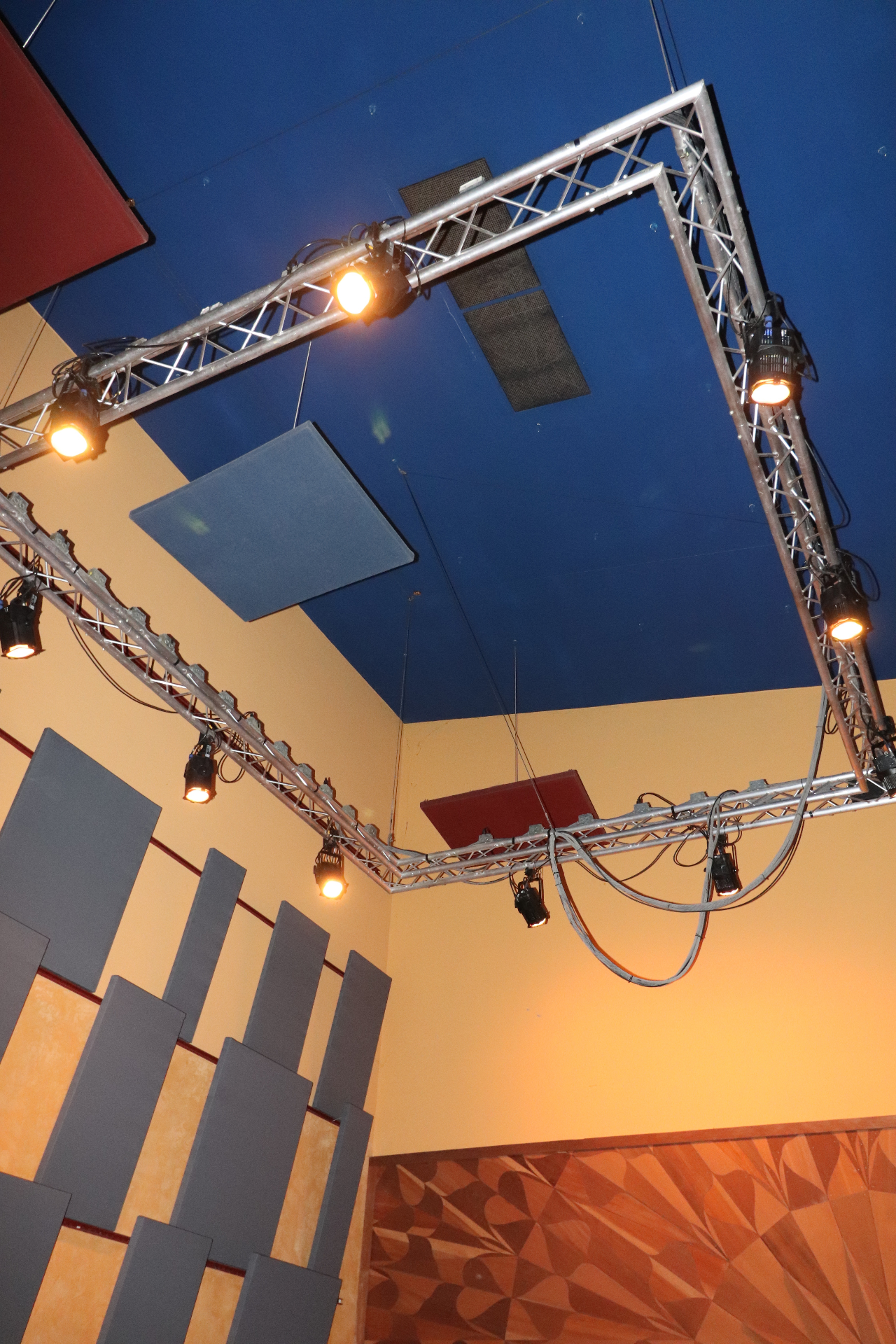
Stand in Studio A at 2200 Bridgeway and look up at the ceiling. Thirty-two feet of air sit between you and the surface above. The lighting truss, the acoustic panels, and the room's geometry are all still here. A studio owner who said yes, a producer who knew what he needed, and an engineer who knew how to build it — together. Kellgren built the original room to tell the truth about what musicians played. Frager raised that ceiling to tell a bigger truth about what drummers needed. The room could do something after 1993 that it couldn't do before. Every record made in Studio A since carries that decision somewhere in the sound. Most of the artists who made those records have no idea it's even there.
Metallica — from the Plant sessions
- Metallica — Nothing Else Matters (Official Music Video)
- Metallica — Until It Sleeps (Official Music Video, Load, 1996)
- Metallica — The Unforgiven (Official Music Video, 1991)
- Metallica — Sad But True (Official Music Video, 1992)
- Metallica on YouTube
- metallica.com — official band site
Plant Radio is dialed to stream 64 historic KSAN and KFOG broadcasts like Steve Miller, Fleetwood Mac, Bob Marley, Bonnie Raitt, Journey, Jerry Garcia, and many more surprises.
Turn on the radio