Rick James & "Street Songs": Inside the Record Plant Sessions
Rick James drove out to Sausalito in the fall of 1980 with a guitar, a bass, a drum machine, and a problem. His previous album, Garden of Love, had stalled at number 83 on the Billboard 200. Three consecutive gold albums had set a standard he'd failed to meet. A tour where he'd put Prince on as his opening act had turned hostile, with the 22-year-old from Minneapolis outperforming him every night. Motown was watching. James had spent time in Buffalo getting back to his roots, and he'd come to the Record Plant — Gary Kellgren's studio in Sausalito — with a clear idea of what he needed to make.
He told his keyboardist Levi Ruffin Jr. before the sessions started: "If this doesn't work, I'm gonna be a carpenter."
The Room
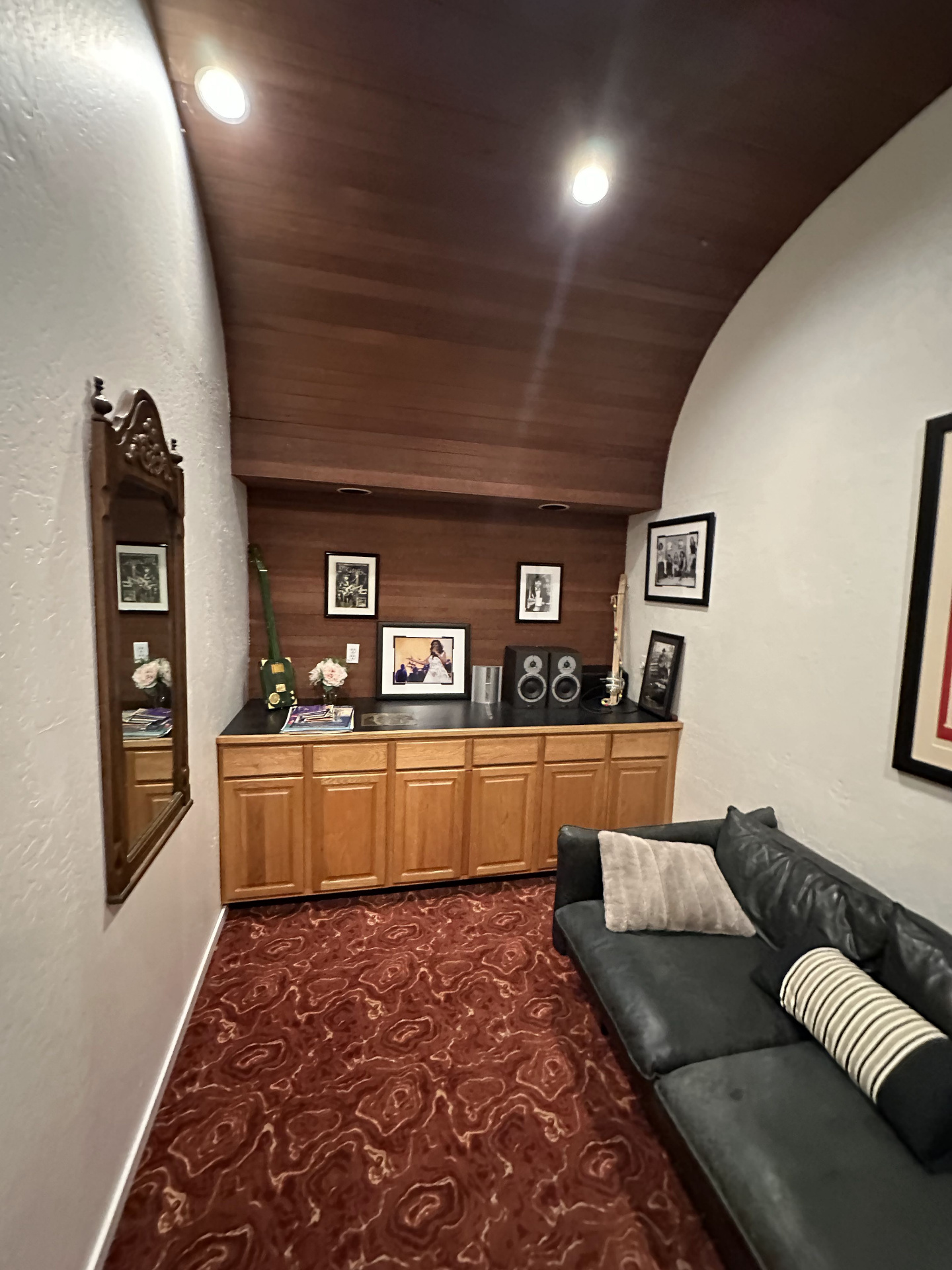
The studio management gave James a conference room adjacent to the main recording spaces at 2200 Bridgeway. He made it his home for the duration of the sessions. He worked from dawn to sunset every day, with his guitar and bass and his drum machine, focused on the material and the feel. There was a bed in the room for when he needed to sleep. He didn't leave to go home between sessions. He lived inside the record he was making.
The room still exists in this building (see photo). And we can only imagine what went down in there but was no doubt a freaky scene. The waterbed floor is still there, but the waterbed has thankfully been removed. Photos from the sessions show the same walls, the same dimensions, the same sense of a space that became something more than a conference room because of what happened inside it during December 1980 and January 1981. A framed UPI wire photo on the wall shows James holding his 1982 American Music Award. The award lives next to the room where he earned it.
What He Was Making
James knew exactly what he wanted. He said it plainly in his autobiography: "a street album, an album that talked about ghettos, pimps, hoes, dope, police, passion, and love." He didn't want the Caribbean-influenced softness of Garden of Love. He wanted something harder, more honest, and more himself. He called the style punk funk — funk with the aggression and directness of punk, stripped of the studio sheen that had dulled R&B in the late 1970s.
He wrote every song on the album. He composed, arranged, and produced every track himself. He played guitar, bass, drums, percussion, timbales, and timpani on the sessions. The album was essentially one man working alone in a room from sunrise to sunset, building something out of nothing but intention and time.
Give It to Me Baby
The album's lead single took its final form during rehearsal. Drummer Lanise Hughes changed the beat while the band was running through the track, and the groove locked into place around that change. It was released in February 1981 and spent five weeks at number one on the Billboard Hot Soul Singles chart. James wanted something that commanded the room the moment it started. He got it.
Super Freak
James didn't think much of it when he wrote it. The rest of the album was finished. He threw it together quickly at the end of the sessions, in this building, as something to fill a gap. He wanted a silly song with new wave texture, something he said that "white folks could dance to." He started with the bassline, added guitar, then found a tuning on his Oberheim OB-Xa synthesizer that he described as sounding like ghosts. He put an operatic vocal structure over it because he was into opera and classical music. The whole thing was built almost as a joke.
He called in The Temptations to sing background vocals. Melvin Franklin, the group's legendary bass singer, was James's uncle. Franklin and four other Temptations sang on "Ghetto Life" and "Super Freak," and James included a shout-out in the lyrics: "Temptations sing." The collaboration was personal, not just professional. James told Billboard he wanted to get the old Motown spirit back, the family relationships between the Supremes, Marvin Gaye, and the Temptations. He built that family onto the track in one afternoon.
Fire and Desire
Teena Marie sang lead vocals on the album's closing track, a seven-minute duet that James never released as a single. The song was a conversation between two people admitting they'd hurt others and recognizing the same damage in each other. James confessed. Marie answered him. The record ran for seven minutes and ended with nothing resolved except honesty. Radio didn't play seven-minute songs. Quiet storm stations did, and they played this one through the 1980s and into the 1990s until it became a classic of the format.
James and Marie reunited to perform "Fire and Desire" at the 2004 BET Awards. It brought the house down. James sadly died of heart failure only five weeks later at 56. Marie died six years after that at 54. The song they sang that night was the one they had written and recorded together at 2200 Bridgeway in the winter of 1980.
What Street Songs Became
The album came out on April 7, 1981. It reached number three on the Billboard 200 and spent twenty weeks at number one on the Billboard Soul LPs chart. It stayed on the charts for eighteen months. It was certified platinum in the United States in July 1981 and eventually sold four million copies worldwide. James received Grammy nominations for Best Male R&B Vocal Performance and became the first African American male artist nominated for Best Male Rock Vocal Performance, for "Super Freak."
Motown hadn't been sure what it had in Rick James after Garden of Love. Street Songs answered that question definitively. It was one of the biggest-selling albums in the label's catalog at that point and remains one of the defining records of 1980s R&B.
The Room Today
The conference room at 2200 Bridgeway is still here. The building held whatever James brought into it during those six weeks — the pressure from Motown, the humiliation of being outperformed by his own opening act, the carpenter threat, the decision to strip everything down and go back to something honest. None of that context shows up in the music. What shows up is the confidence of a man working in a room where he didn't have to explain himself to anyone, from dawn until he was done, for as many days as it took.
He made one of the most influential and groundbreaking R&B records ever made in a conference room in Sausalito. The room is still there. The record still holds up.
Plant Radio is dialed to stream 64 historic KSAN and KFOG broadcasts like Steve Miller, Fleetwood Mac, Bob Marley, Bonnie Raitt, Journey, Jerry Garcia, and many more surprises.
Turn on the radio- 2200 StudiosThe Record Plant Sausalito: 1972–2008
- 2200 StudiosCarlos Santana and the Studio He Calls Home
- 2200 StudiosGary Kellgren: He Built the Record Plant, Then Died at 38
- 2200 StudiosThe Sound of a Room
- WikipediaStreet Songs
- WikipediaSuper Freak
- Classic MotownStreet Songs
- Classic MotownSuper Freak
- DiscogsStreet Songs — recording credits
- Rolling Stone500 Greatest Songs of All Time (2021)
- IMDbRick James — filmography & credits
- IMDbBitchin': The Sound and Fury of Rick James (2021)
- Rick James — You & I (Soul Alive TV Performance, 1978, WPIX)
- Rick James — Super Freak (Official Music Video)
- Rick James — Give It to Me Baby (RickJamesVEVO)
- Rick James & Teena Marie — Fire & Desire (BET retrospective of their final performance)
- Rick James — Mary Jane (the song that broke him in 1978)
- Rick James — Cold Blooded (1983 follow-up to Street Songs)
- Rick James on YouTube
- Rick James Official Site
- Rick James on Instagram
- Rick James, *Memoirs of a Super Freak*, 2007.
- Rick James, *Musician* magazine interview, 1983.
- Rick James, *Billboard* magazine interview, 1981.
- *Street Songs* — Wikipedia.
- *Super Freak* — Wikipedia.
- Classic Motown — *Street Songs*.
- Classic Motown — *Super Freak*.
- Discogs — *Street Songs* recording credits.
- Rolling Stone — 500 Greatest Songs of All Time, 2021.
- Image credits: the black-and-white portrait near the top of the article and the 1984 *Lifestyles of the Rich and Famous* still are via Wikimedia Commons. The small video stills are screen grabs from the *Super Freak* music video. All other photographs by Tom Proctor.