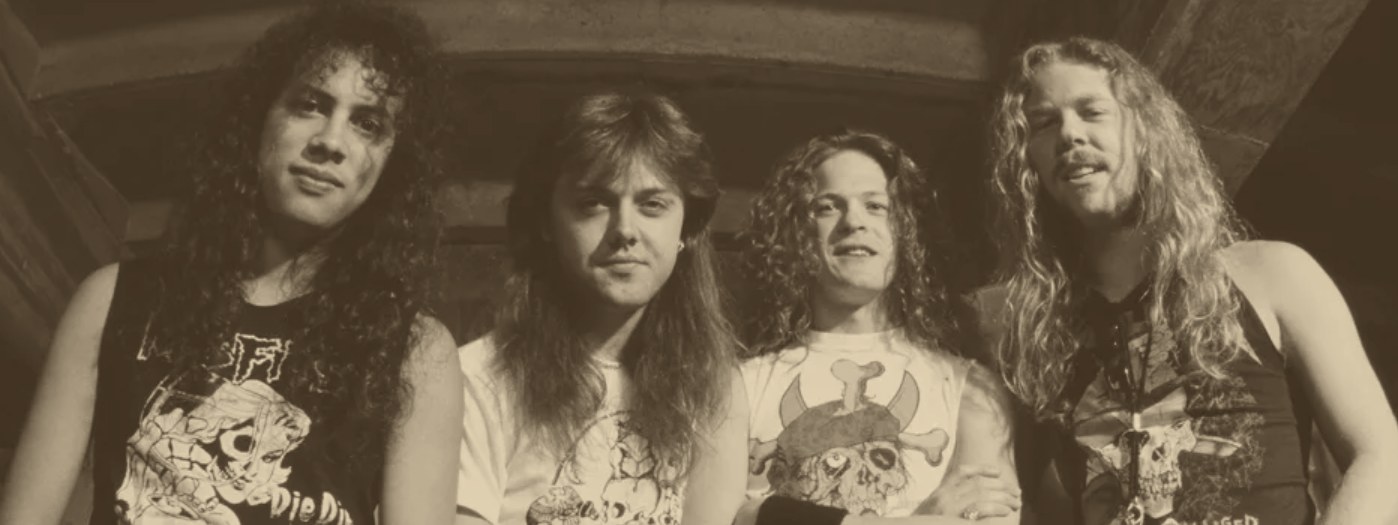
Metallica at the Plant
Metallica is a Bay Area band, and 2200 Bridgeway is a Bay Area studio. By the mid-1990s those two facts had locked into a working relationship that produced key studio albums, a piece of permanent architecture, and a chapter of the room's history that nobody else can claim.
Load, ReLoad, and a Long Lockout
Producer Bob Rock had already worked with Metallica on the self-titled "Black Album." When the band came back to make Load (1996) and ReLoad (1997), they wanted a different sonic palette — bigger, looser, more rock-and-roll than thrash. They needed a room that could give them that, and they wanted to be close to home.The Plant in Sausalito got the call. With a few tweaks here and there, it might just suit their purpose.
"The band had been there before to edit and mix Live Shit: Binge and Purge. For Binge, they had booked all the (main) rooms A, B, and Mix One. There were three mix rooms going all at once plus edit suites."
The subsequent album sessions were long. Metallica is famous for marathon recording schedules, and the building was set up for exactly that — kitchen, lounge, and the kind of unhurried atmosphere Gary Kellgren and Chris Stone designed in 1972. The band moved in. They didn't rush.
The Ceiling
The thing they're most associated with at this studio is the roof. Studio A's original ceiling was around 14 feet — fine for most sessions, but not big enough for the drum sound Bob Rock and Lars Ulrich were after. Owner Arne Frager spent roughly $750,000 raising it to 32 feet, and that ceiling has stayed exactly where Frager put it. The full story is told in The $750,000 Ceiling.
The Lounge They Built
The ceiling is the famous architectural change, but it wasn't the only one. Metallica's sessions ran long enough that the studio's existing kitchen — small, original to the 1972 build, and not suitable for rock stars wasn't cutting it for a band that effectively lived in the building for months at a time. So they paid to fix that too.
On the side of the studio where a jacuzzi had previously sat, the band funded a build-out: a proper lounge and a real kitchen, added on as new rooms rather than carved out of existing ones. The lounge in the photo above — the leather sectional under a wall of framed gold records — is that addition. The kitchen behind it is the one that made multi-month lockouts actually livable, and every band that has worked at 2200 since has used both rooms. The new kitchen and lounge area has had lasting value as an essential improvement to the studio.
Why Sausalito
Metallica could have recorded anywhere on earth. They chose a building twenty minutes from where most of them lived. Part of that was logistical, but the larger reason is the same one that kept Santana coming back through the same rooms for fifty years: the place is set up to be inhabited, not rented. Long sessions, deep focus, no clock. And once the ceiling was where the band wanted it, there wasn't a comparable room within driving distance.
What's on the Walls
The lounge at 2200 still carries Metallica memorabilia from those sessions — gold records, framed posters, an original Load-era promo. None of it is a museum display. It is what you'd expect on the walls of a working room that the band actually used and never quite left behind. There's a Marantz 2275 with Advent speakers in a nod to 70s vintage stereo gear in the foreground some of you would love.
Metallica — key recordings
- Metallica — Nothing Else Matters (Official Music Video)
- Metallica — The Unforgiven (Official Music Video, 1991)
- Metallica — Until It Sleeps (Official Music Video, Load, 1996)
- Metallica — Enter Sandman (Official Music Video, 1991)
- Metallica — Sad But True (Official Music Video, 1992)
- Metallica on YouTube
- metallica.com — official band site
More on YouTube
From Rick Beato
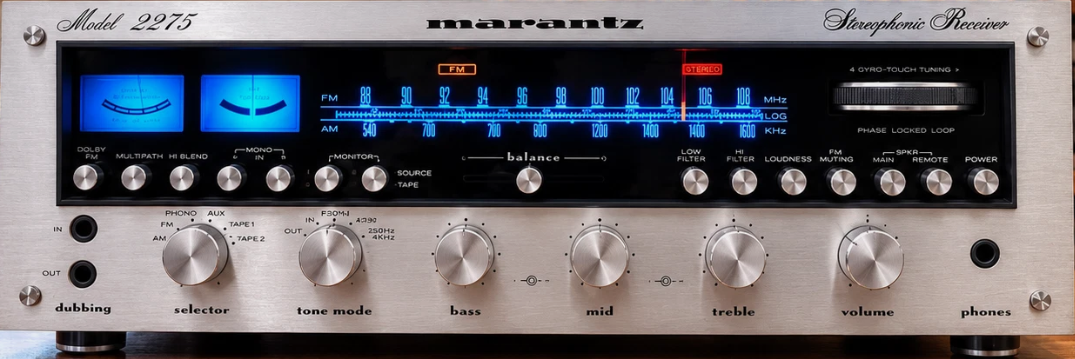
Plant Radio is dialed to stream 64 historic KSAN and KFOG broadcasts like Steve Miller, Fleetwood Mac, Bob Marley, Bonnie Raitt, Journey, Jerry Garcia, and many more surprises.
Turn on the radio