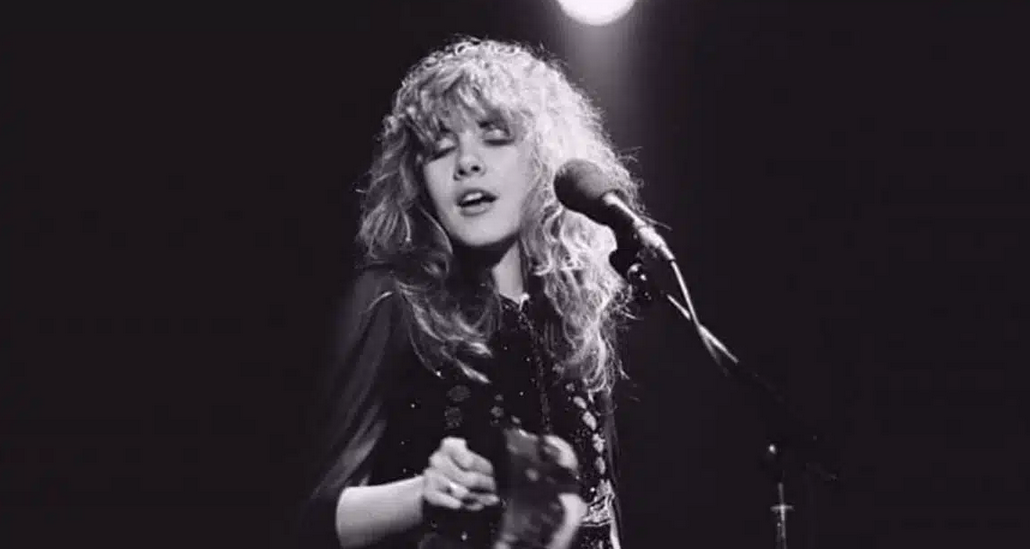
How Stevie Nicks Wrote "Dreams" at Record Plant Sausalito
By Tom Proctor
It's 1976 and Fleetwood Mac is falling apart inside the most comfortable building in Sausalito.
Mick Fleetwood's wife has been sleeping with his best friend. John and Christine McVie are divorcing after eight years of marriage. Stevie Nicks and Lindsey Buckingham are ending their own relationship and showing up the next day to sing into the same microphone. The Record Plant's kitchen is running all night. Gary Kellgren and Chris Stone built this place. Stone described the sessions without sentiment: the band would arrive at seven, eat a big feast, party until they couldn't function, and then start recording. That's how Rumours got made. That's the building these songs came out of.
When Nicks wasn't needed in the main studio, she wandered. One afternoon she turned down a hallway and opened a door that changed everything.
The Room Nobody Else Was Using
Sly Stone had commissioned a studio at the Plant built to specifications nobody else would have thought to give. The engineers called it the Pit. The control console sat ten feet into the foundation. Maroon carpet covered every surface including the ceiling. There were no windows, no right angles, no acknowledgment that this was supposed to look like a recording studio. Psychedelic murals ran up the walls. Adjacent to the main room sat a bed draped in black velvet with Victorian curtains. Sly had lived in this building. The Pit was where he lived in it.
Nicks walked in carrying a Fender Rhodes keyboard and a small cassette player. She sat down on Sly's bed. She found a drum pattern. She switched the cassette on.
She wrote Dreams in ten minutes.
“It wasn't my room,” she said later, “so it could be fabulous.” That's as clean a description of creative freedom as anyone's ever offered. She wasn't protecting anything in that room. She wasn't navigating anyone. She was just a woman on someone else's bed with something she needed to say and no one watching her say it.
What she needed to say was this: Lindsey Buckingham was going to end up alone. Not in anger, not in accusation, but in the cool philosophical register of someone who's already done grieving and moved into clarity. Buckingham was across the hall writing Go Your Own Way, which was fury set to guitar. Nicks wrote Dreams, which was something colder and more permanent. “Players only love you when they're playing.” She handed him the cassette that night. He recognized it immediately.
What the Band Did With It
She played it for the rest of the band the next day. They weren't impressed.
Christine McVie called it boring. Three chords, one note in the left hand, nothing happening. Nicks pushed anyway. She said please, at least try it, because the way she played things sometimes you had to really listen. The band agreed to record a basic track. Mick Fleetwood played drums. Nicks played the Rhodes and sang live into the microphone. That was the Sausalito session. The guitars and bass came later, in Los Angeles.
Producer Ken Caillat took eight bars of Fleetwood's drumming and built a loop. He locked it, repeated it, ran it under the entire song. His goal was a deep hypnotic effect. What he created was the most recognizable rhythmic signature in Fleetwood Mac's catalog. The drumming on Dreams isn't Mick Fleetwood playing the song. It's Mick Fleetwood playing eight bars, on a loop, over and over. The heartbeat of the most successful single the band ever released is a drum loop from 1976, made in this building.
Buckingham took the three identical chord sections McVie had called boring and made each one feel different. He didn't rewrite anything. He changed the relationships between parts, built tension through arrangement rather than composition, and turned three chords into a song that sounds like it has an arc. Christine McVie added keyboard texture that filled space without crowding the vocal. The song that nobody wanted to record started sounding like something.
Nicks' live vocal from the Sausalito basic track made it onto the finished record. Not a re-recording. Not a polished later take. The voice you hear on Dreams is the one she put down the morning after she wrote it in Sly Stone's room, on the first day the band bothered to try it.
What Happened to the Song
Rumours came out in February 1977. Dreams was the second single, released in March. It hit number one in June and spent 23 weeks on the Billboard Hot 100. It's the only number-one single Fleetwood Mac ever had in America. Rumours went on to sell more than 40 million copies. The RIAA certified it Diamond. It's one of the ten best-selling albums in recorded history. The Sausalito sessions anchored the album, but it was tracked across five studios — Sausalito, Criteria Miami, Wally Heider, Davlen, and Zellerbach — by people who could barely stand to be in the same room.
Forty-four years later, a man named Nathan Apodaca skateboarded to work in Idaho, drinking cranberry juice and lip-syncing to Dreams, and filmed it on his phone. The video hit 50 million views. The song re-entered charts around the world. Stevie Nicks posted a response video riding a skateboard. The song she wrote in ten minutes on a borrowed bed in 1976 was still moving people like she'd just finished it.
What Remains
The Pit is still in this building, but to see it would be an archeological dig under the floor of the Garden Studio. Arne Frager rebuilt the room as a mix space in the 1990s when it became the Garden, but the bones Sly Stone put in are still there. The unusual proportions. The sense that you're somewhere design standards never reached. The understanding that some rooms exist outside the rules.
Nicks understood that immediately. She walked in, sat down, and wrote the biggest song of her career because the room wasn't hers and she didn't have to be careful in it. The building gave her that. A borrowed afternoon, a borrowed bed, a cassette player running.
Ten minutes.
Plant Radio is dialed to stream 64 historic KSAN and KFOG broadcasts like Steve Miller, Fleetwood Mac, Bob Marley, Bonnie Raitt, Journey, Jerry Garcia, and many more surprises.
Turn on the radio- 2200 StudiosThe Record Plant Sausalito: 1972–2008
- 2200 StudiosSly & the Family Stone at Record Plant Sausalito
- 2200 StudiosGary Kellgren: He Built the Record Plant, Then Died at 38
- 2200 StudiosFleetwood Mac live at the Record Plant Sausalito, 1974 — Record Plant Radio
- GRAMMY MuseumMaking Rumours — Ken Caillat at the GRAMMY Museum
- WikipediaRumours (album)
- Vintage King40 Years of Excess: The Recording of Fleetwood Mac's Rumours
- GRAMMY.comKen Caillat Revisits Fleetwood Mac's Rumours
- UKEssaysThe Significance of Fleetwood Mac's Rumours
- Fleetwood Mac — Dreams (Official Music Video, 1977, 4K)
- Fleetwood Mac — Go Your Own Way (Official Music Video, HD)
- Fleetwood Mac — The Chain (Official Music Video, HD)
- Fleetwood Mac — Landslide (Live Official Video, HD)
- Stevie Nicks — Edge of Seventeen (Official Music Video)
- Stevie Nicks — Stand Back (Official Music Video, HD Remaster)
- Stevie Nicks & Tom Petty — Stop Draggin' My Heart Around (Official Video, HD Remaster)
- Ken Caillat at the GRAMMY Museum — on recording "Songbird"
Caillat on the vocal-mic choices and the unusual Zellerbach Auditorium session that produced Songbird.
- Rick Beato — The Greatest TWO Chord Song of All Time
Beato breaks down why Dreams is his pick for the greatest two-chord song ever written.
- Fleetwood Mac 2001 Documentary
A 42-minute band history from the early blues years through the Rumours era and beyond.
- Fleetwood Mac: Unbroken Chain (2004 Documentary)
A candid profile of the band's inner dynamics and the tensions that produced their best work.
Fleetwood Mac — Bill Graham Presents, Oakland Stadium, May 7, 1977. Poster design by Randy Tuten and William Bostedt.Image courtesy of Wolfgang's Fleetwood Mac backstage during the Rumours era — Mick Fleetwood, Stevie Nicks, John McVie, Christine McVie, and Lindsey Buckingham. Framed print hanging in the 2200 kitchen.
- Ken Caillat & Steve Stiefel, *Making Rumours: The Inside Story of the Classic Fleetwood Mac Album* (Wiley, 2012).
- Rumours (album) — Wikipedia)
- Dreams (Fleetwood Mac song) — Wikipedia)
- Ken Caillat Revisits Fleetwood Mac's Rumours — GRAMMY.com
- Ken Caillat, interview with HuffPost on the making of Rumours, 2012.
- Stevie Nicks, interview with Blender magazine, 2005.
- Mick Fleetwood, interview with Q magazine, 1997.
- Classic Albums: Rumours (documentary, 1997)
- Rolling Stone — "Flashback: Fleetwood Mac Play 'Dreams' in 1977"